Can You Replace Shade Fabric Without Replacing the Whole Structure?
Steel Outlives Fabric by Design
The two halves of a shade structure age on different clocks. The fabric hangs in direct sun every day. It takes the full UV load, the wind flutter, and the heat cycling. That is the job. Fabric sacrifices itself so everything under it stays protected.
The steel has an easier life. Powder coating seals the frame against rust and UV. The posts and rafters carry load, but they do not degrade the way fabric does. The warranty numbers tell the story. Our premium shade structure materials carry a 10-year warranty on Commercial95 fabric and a 20-year warranty on the steel frame. The frame is built to serve two fabric lifetimes.
Texas makes the gap wider than most places. The EPA rates central Texas UV as very high to extreme from late spring through early fall, and that exposure lands on the fabric first every single day. A canopy that would coast for years in a milder climate earns its retirement faster here, while the powder-coated steel underneath barely notices the difference.
That gap is the whole case for re-skinning. Tearing out a sound frame to fix worn fabric means paying for steel, excavation, and engineering you already own. New fabric on the existing frame skips all three.
Signs the Fabric Is Done and the Frame Is Not
Fabric tells you when it is finished. Look for these signs:
- Fading that turns a deep color chalky and washed out.
- Fraying or unraveling along seams, corners, and attachment points.
- Small tears that grow after every storm instead of staying put.
- Sagging or flapping where the panel has stretched and lost tension.
- Thin spots you can see daylight through.
The frame speaks a different language. Surface scuffs and faded powder coat are cosmetic. Real frame problems look like rust that flakes or eats through, bent posts, cracked welds, or footings that have shifted. Those change the conversation from fabric to structure.
Most aging structures show the first list, not the second. The fabric did its job for years and wore out on schedule. The steel kept its strength. That is the exact case re-skinning was built for.
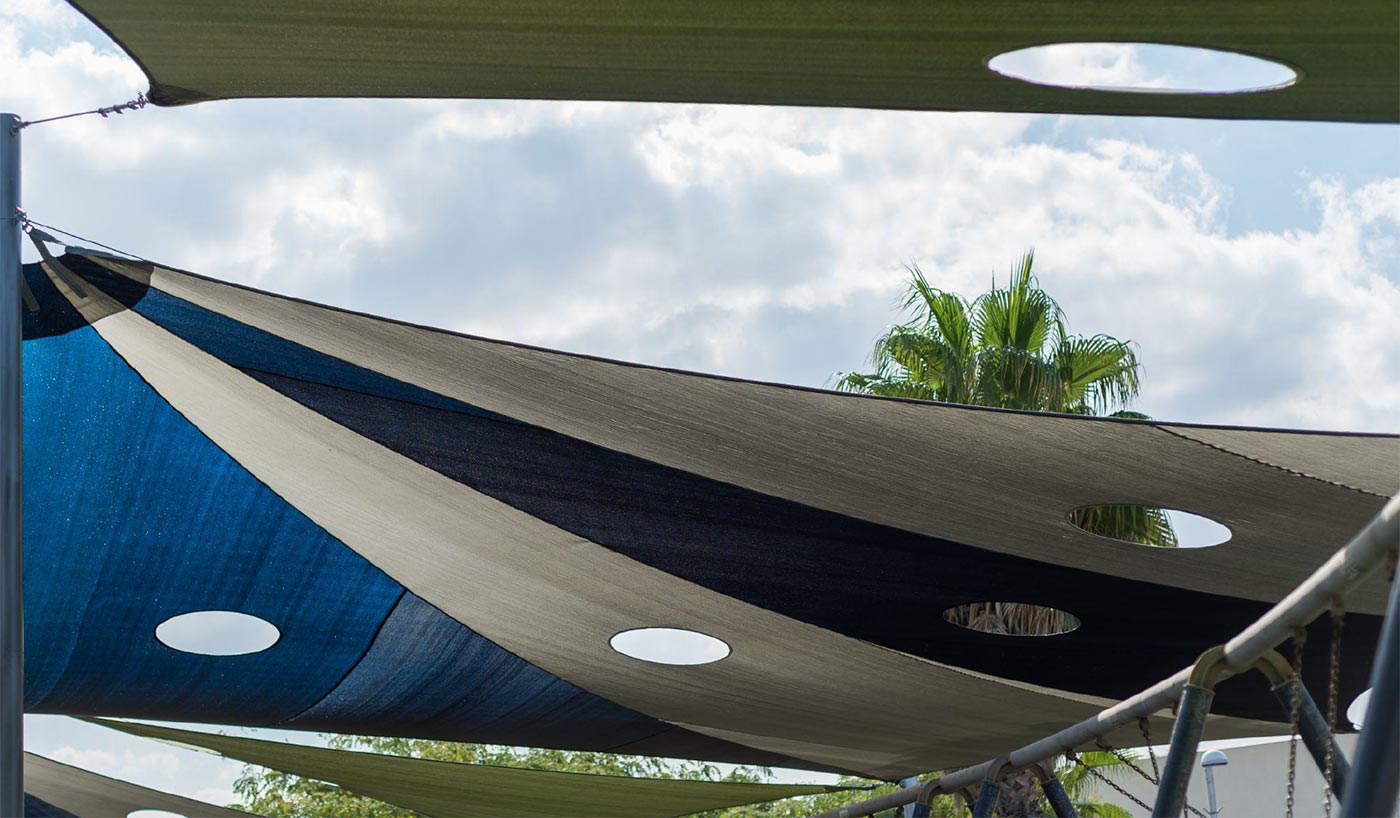
Re-Skinning Puts New Fabric on a Proven Frame
Fabric replacement follows a short path. Here is how it runs:
- Frame inspection first. We check welds, posts, powder coat, and attachment hardware before quoting any fabric.
- Field measurements next. Every panel is measured off the actual frame, not a spec sheet, so the new fabric fits tight.
- Fabrication in our New Braunfels facility. Panels are cut and sewn to those measurements from commercial-grade fabric.
- Tensioned installation. The crew fits the new panel, tensions it to spec, and checks the pitch so water sheds instead of pooling.
Most single-structure re-skins install in a day. There is no excavation, because the footings already exist. There is no engineering from scratch, because the frame already proved itself. The site stays usable the whole time, which matters for pools, playgrounds, and business lots.
The work is not limited to our own builds. If another company installed the structure years ago, we can still inspect the frame and quote new fabric. A sound frame is a sound frame.
Color choice comes up at this stage too. We show fabric samples during the quote. Darker colors perform best for sun and UV protection and cooler temperatures, so we typically steer customers away from very light fabrics, which are less effective and show airborne pollen and debris more.
New Fabric Costs a Fraction of a New Structure
The savings come from what re-skinning skips. No demolition. No new steel. No concrete work. No fresh engineering. The fabric panel and the labor to install it are the whole project.
Time follows the same curve. A full structure runs through design, fabrication, excavation, and installation over weeks. A re-skin is measured, fabricated, and installed on a much shorter cycle. For a business, that is the difference between a shaded patio in weeks and one lost for a season.
Multi-structure properties feel the math most. An HOA with canopies over the pool, the mailbox cluster, and two playgrounds can re-skin all four for well under the cost of replacing one. Parks departments and school campuses run the same numbers across sites, which is why fabric replacement is often the line item that survives a tight budget year.
The new fabric also resets the clock. A fresh Commercial95 panel blocks up to 95% of UV rays, resists mold and mildew, and carries its own 10-year manufacturer warranty. The structure goes back to full protection without touching the frame.
Budget timing works in your favor here too. Because a re-skin needs no excavation or engineering, it fits inside a maintenance budget instead of a capital project, and it can be scheduled around your calendar rather than a construction season. Many owners book fabric replacement for the same off-peak weeks they schedule other property maintenance.
One honest caveat belongs here. If the inspection finds real frame damage, rust-through, cracked welds, or shifted footings, new fabric will not fix it. In that case we say so and quote the right repair or replacement instead. Nobody wins when new fabric goes on a failing frame.
There is a sustainability angle worth naming as well. Re-skinning keeps tons of sound steel in service instead of sending it to a scrapyard, and it avoids the concrete work that a full rebuild would pour into the ground. For organizations that report on waste reduction or facility sustainability, fabric replacement is an easy win to document.
Frequently Asked Questions
How long does shade structure fabric last?
Commercial-grade fabric typically serves 10 to 15 years in Texas sun, and our Commercial95 fabric carries a 10-year manufacturer warranty. Lifespan depends on UV exposure, wind, and tension. Cheap consumer fabric wears out far faster, which is why replacement panels should stay commercial grade.
Can you replace fabric on a structure ShadePro did not build?
Yes. We inspect the frame first, then measure and fabricate panels to fit it. If the steel is sound, the original installer does not matter. If the frame has problems, we tell you before any fabric is ordered.
How long does fabric replacement take?
Most single-structure re-skins install in one day once the panel is fabricated. Measurement to installation usually runs a few weeks, driven by fabrication time. There is no excavation and no site disruption.
When is replacing the whole structure the better choice?
When the frame itself has failed. Rust-through, cracked welds, bent posts, or shifted footings mean the steel can no longer carry a tensioned panel safely. A frame inspection settles the question before you spend anything on fabric.
Does replacement fabric come with a warranty?
Yes. New Commercial95 panels carry a 10-year manufacturer warranty, the same coverage a new structure gets. The existing steel keeps whatever remains of its own coverage.
A Sound Frame Deserves New Fabric, Not Demolition
So, can you replace shade fabric without replacing the whole structure? Yes, whenever the frame passes inspection, and most frames do. Steel is built to outlast two rounds of fabric. Re-skinning restores full UV protection, resets the warranty on the canopy, and costs a fraction of starting over. The only wrong move is guessing. Let an inspection tell you which side of the line your structure sits on.
Next Steps for Property and Facility Managers
A few quick moves turn a worn canopy into a scheduled fix:
- Photograph the fabric up close: seams, corners, tears, and any spots where daylight shows through.
- Walk the frame and note rust, cracked welds, or posts that look out of plumb.
- Find the original install date if records exist. Fabric age frames the repair-or-replace question fast.
- List every structure on the property. Re-skinning several at once often makes scheduling and pricing simpler.
- Book a frame inspection before budgeting, so the quote matches what the steel actually needs.
Ready to give a sound frame a second life? Request a free estimate and the ShadePro team will inspect your structure, confirm the frame, and quote new fabric measured to fit it.
TRUSTED BY