How Do School Districts Buy Shade Structures Without a Bid?
The RFP Burden Behind Every District Purchase
Texas districts follow strict purchasing rules. Under Texas Education Code 44.031, contracts worth $50,000 or more must run through an approved competitive method. A Legislative Budget Board issue brief lists purchasing cooperatives among the methods the law allows.
Running a formal RFP is the part that hurts. Staff draft the specs. They advertise for the required window, field vendor questions, and score every response. Then the recommendation goes to the school board. Committees must be seated and scoring must be documented. Award decisions can draw vendor protests that stall a project after months of work. The full cycle often eats a semester or more. It also competes for staff time with every other purchase the district needs that year.
The burden lands hardest on small districts. A purchasing office of one or two people cannot run parallel RFPs for roofing, buses, technology, and playground shade in one budget cycle. Lower-dollar projects wait behind the big ones. Shade is exactly the kind of project that keeps sliding.
There is a cost angle too. Staff hours spent on an RFP are real money. For a mid-size shade project, the administrative cost of a district-run bid can rival a noticeable slice of the project itself.
The calendar makes it worse. Crews need empty campuses, so summer is the install window. An RFP started in spring often cannot award, build, and install before August. Miss the window and the project waits a full year. The play equipment keeps hitting burn-risk temperatures every afternoon.
BuyBoard Moves the Competitive Bid Ahead of the Purchase
BuyBoard is a purchasing cooperative run by the Texas Association of School Boards. According to TASB, every product and service on a BuyBoard contract was awarded through a competitive process before members ever see it. That is what spares members the time and cost of running their own formal RFP.
The legal footing is direct. Texas Local Government Code 271.102 says a local government that buys through a cooperative program meets its competitive bidding requirement. The Education Code points the same way for districts. The competition happened at the cooperative level, in public, under Texas law. The awarded contract carries that compliance into every member purchase.
Membership stays light. Districts join through an interlocal agreement approved by the board of trustees. Membership is typically free. Thousands of districts, cities, and counties across Texas already belong. For most ISDs, this question was settled years ago. The cooperative is simply part of how the purchasing office works.
So here is the honest version of buying without a bid. The district skips running its own bid. It leans on a bid the cooperative already ran.
That framing matters when questions come up later. Auditors ask how a purchase met the bidding rules. The answer is one line: the purchase ran through an awarded BuyBoard contract under an interlocal agreement. The contract number on the quote and the purchase order tells the whole story.
The Purchase Path From Membership to Purchase Order
Once a district belongs to the cooperative, a shade structure purchase follows a short, repeatable path:
- Confirm membership with the business office. Most Texas ISDs already hold an interlocal agreement with BuyBoard.
- Find an awarded vendor for the category. ShadePro is a BuyBoard Texas approved vendor for shade structures.
- Request a quote that lists the BuyBoard contract number. Pricing then ties straight to the awarded contract.
- Follow local policy for approval. Many boards let staff handle cooperative purchases under a set dollar amount. Larger projects still go on a board agenda.
- Issue the purchase order through the cooperative. That documents the compliant path from start to finish.
One paperwork note is worth knowing. Education Code 44.0331 requires districts to document contract fees on cooperative purchases of $25,000 or more. Purchasing offices handle this routinely. A quote tied to a contract number keeps the paper trail simple. Local policies vary, so the purchasing department stays the final word on approval steps.
Playground and Campus Shade Projects Fit the Cooperative Model
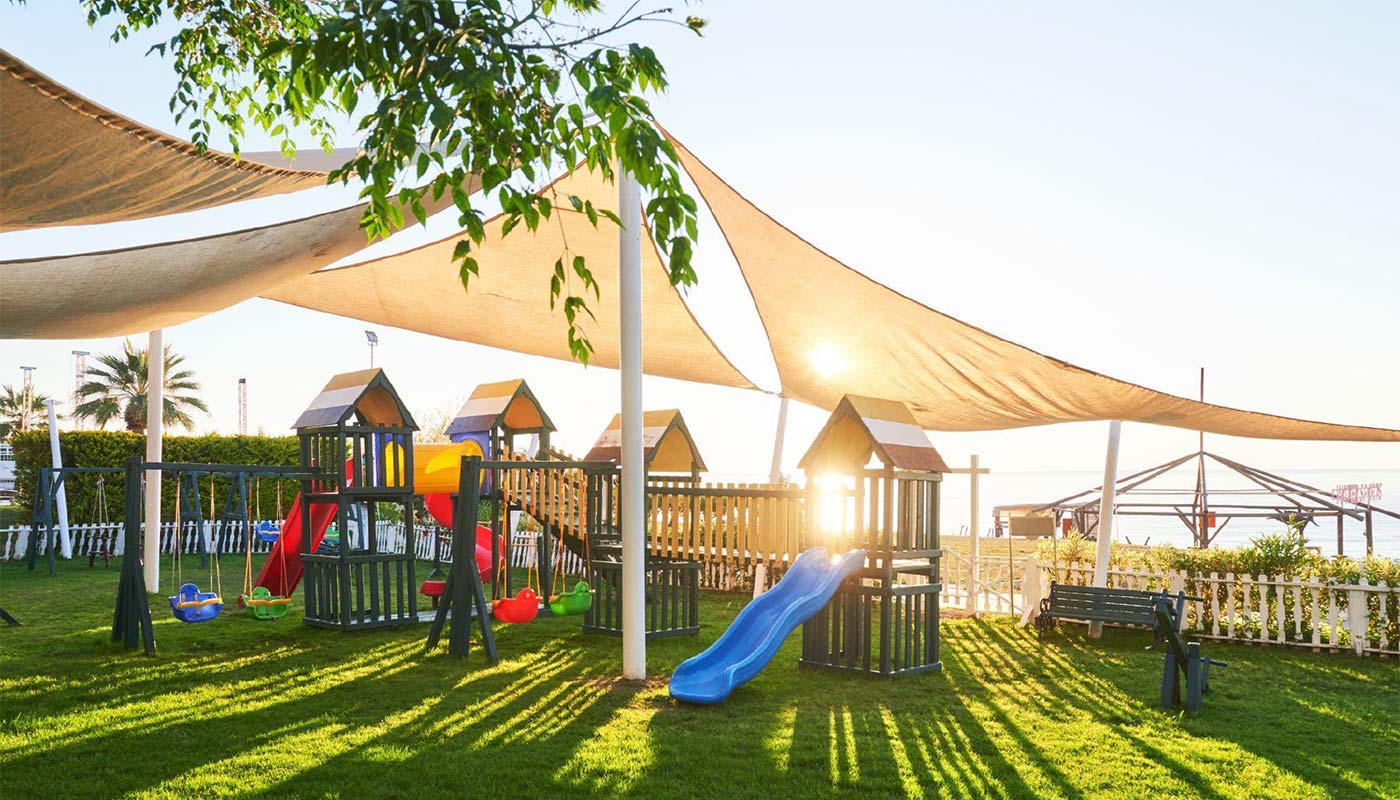
Shade structures fit cooperative purchasing better than most facility projects. The product is standard enough to contract. It is also custom enough to need a vendor who visits the site.
Demand is not fading either. Texas play equipment reaches burn temperatures by late morning for much of the school year. Campuses cut recess and PE when heat spikes. Childcare licensing pushes operators toward covered outdoor areas. A canopy that blocks up to 95% of UV rays turns a rationed play area back into daily teaching space.
The work starts with a site evaluation. The team maps play equipment, ADA paths, fire lanes, and buried utilities. Shop drawings, provided free of charge, then show post placement and coverage before anything is built. Photos of similar-type structures show the finished look at other campuses. The same path covers shade structures for parks and playgrounds that cities and districts share, from standalone playgrounds to full recreation areas.
Timing is where the model pays off. No district-run RFP sits at the front of the project. A spring decision can still hit a summer install window. Districts adding shade across several campuses ride the same contract each time. No restart. Quotes stay comparable year over year.
Here is what phasing looks like in practice. A district covers two elementary playgrounds this summer. Next budget year, it adds the middle school lunch area. The year after that, the pickup canopy goes up at the high school. Each purchase references the same contract. Each one clears purchasing in days, not months.
Our school and daycare shade work follows this exact path. It covers playgrounds, outdoor lunch areas, pickup zones, and walking paths, with engineering documents included for district review.
Frequently Asked Questions
What is BuyBoard?
BuyBoard is a cooperative purchasing program run by the Texas Association of School Boards. It competes and awards contracts for goods and services. Member districts, cities, and counties then buy through those contracts instead of running their own bids.
Does buying through BuyBoard satisfy Texas competitive bidding requirements?
Yes. Texas Local Government Code 271.102 says a purchase through a cooperative program meets competitive bidding rules. Education Code 44.031 lists interlocal agreements among approved methods for districts. The competition happens before the contract is awarded.
Do school districts still need board approval for BuyBoard purchases?
That depends on local policy. Many boards let staff approve cooperative purchases under a set threshold. Larger projects still go to the board. The purchasing department confirms the right path for a given project size.
Can playground shade installation be purchased through BuyBoard, not just the equipment?
Yes. Awarded shade contracts cover design, fabrication, and installation as one project from one vendor. That keeps a single accountable party on the job from site evaluation through final walkthrough.
How long does a BuyBoard shade purchase take compared to an RFP?
The cooperative path removes the district-run procurement stage. That usually saves a semester or more. A contract-referenced quote can arrive within days of a site visit. Districts deciding in spring can realistically target a summer install.
Cooperative Contracts Answer the Bid Question for Districts
So, how do school districts buy shade structures without a bid? They lean on a bid that already ran. BuyBoard contracts carry the competition forward. The law treats the purchase as compliant. The district trades months of RFP work for a quote tied to an awarded contract. For campus shade, that trade often decides whether the canopy goes up this summer or next.
Next Steps for District Facilities and Purchasing Teams
A few practical moves turn a shade need into a summer installation:
- Confirm BuyBoard membership with the business office and locate the interlocal agreement on file.
- Walk the campuses and rank the play areas, lunch zones, and pickup lines where heat limits use the most.
- Request a contract-referenced quote from an awarded shade vendor so pricing is ready for the purchasing office.
- Map the local approval path early, including whether the project size needs a board agenda item.
- Photograph the hottest zones at midday. Surface heat readings help rank campuses and support the budget request.
- Target the summer window by working the timeline backward from the first day of school.
To put a campus shade project on this path, request a free site evaluation. The ShadePro team will assess your play areas and prepare a BuyBoard contract-referenced quote your purchasing office can act on.
TRUSTED BY